Residents and Partnerships Build Up Cleveland’s Food System
Trump Administration’s DOGE cuts impact urban farms and gardens. This has forced residents and growers to work together on building a better food system.
It’s summertime harvest season, and local farmers’ markets are in full swing. Lingering effects of tariffs on household incomes and reduced government food benefits are sending families to farmers’ markets and Community Supported Agriculture programs for fresh and affordable foods.
Droves of shoppers boost urban farms and gardens in Northeast Ohio facing federal funding cuts to agriculture grants that sustain operations and food production. Younger generations learning how grandparents harvested their own food to eat are joining forces with gardens to revive communal living by growing, sharing and selling to neighbors. When the start of the second presidential term of Donald J. Trump spurred massive cuts to social safety nets and grants, Cleveland grower Shirley Bell-Wheeler realized reliance on government doesn’t sustain livelihoods.
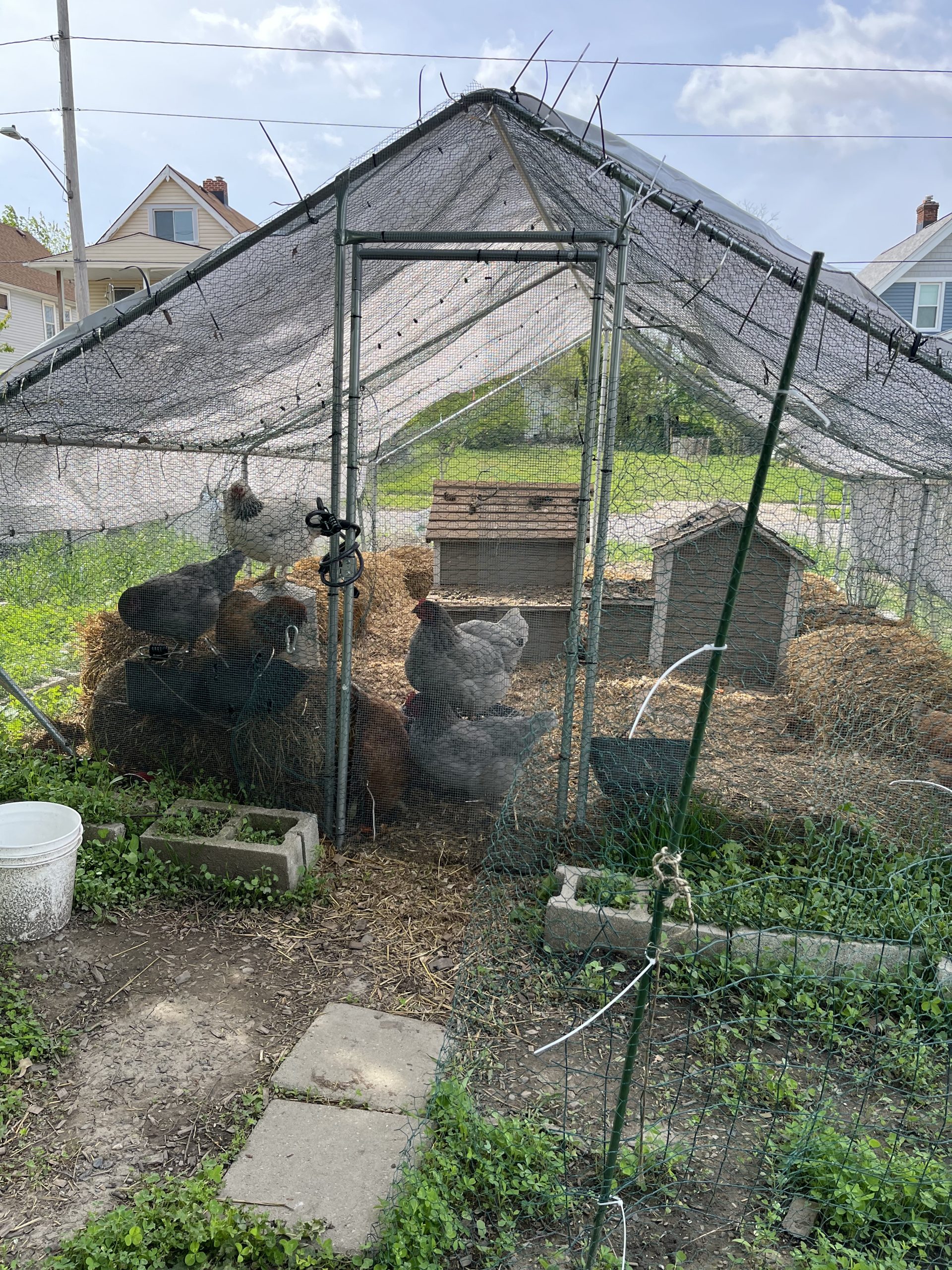
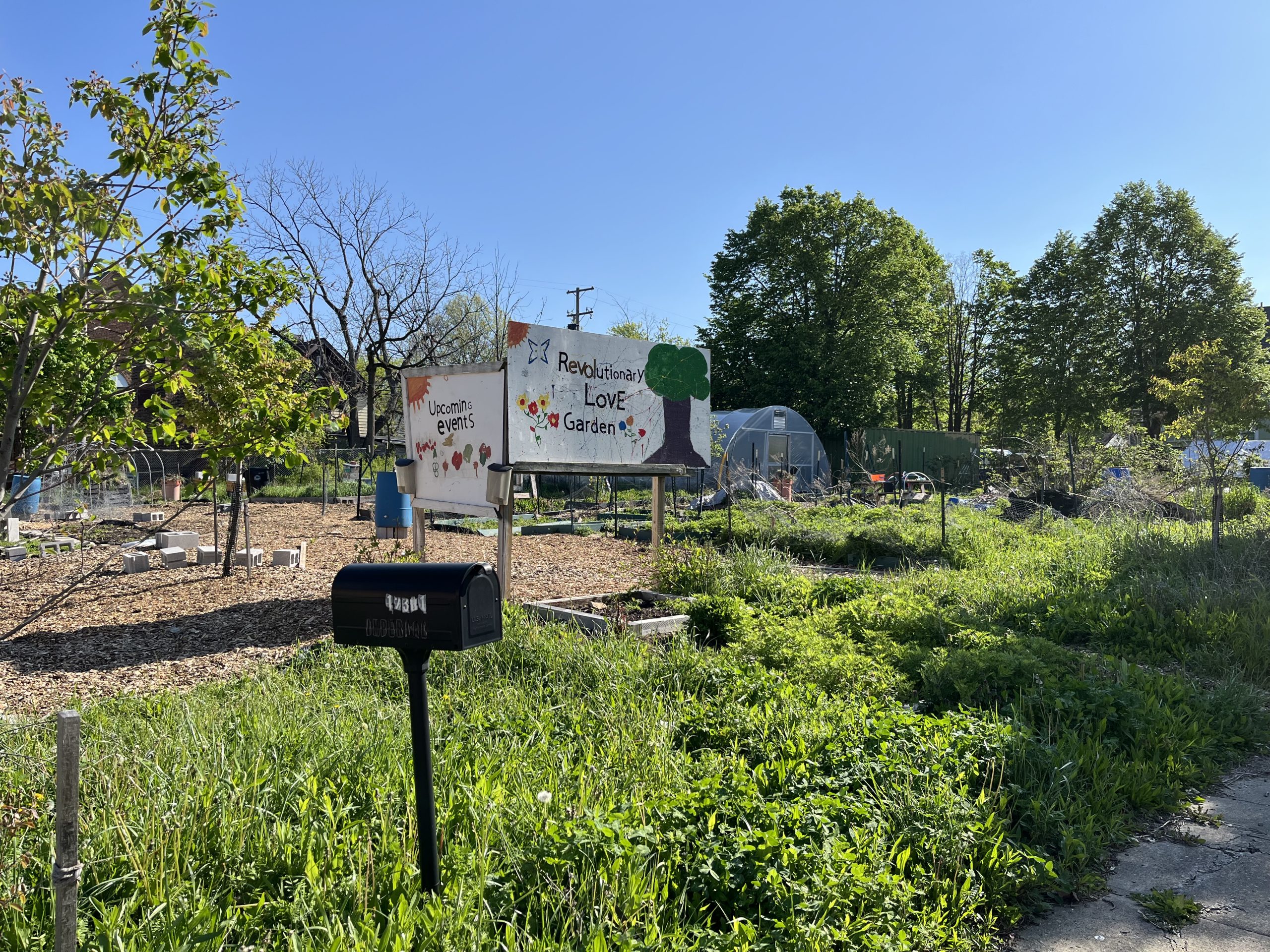
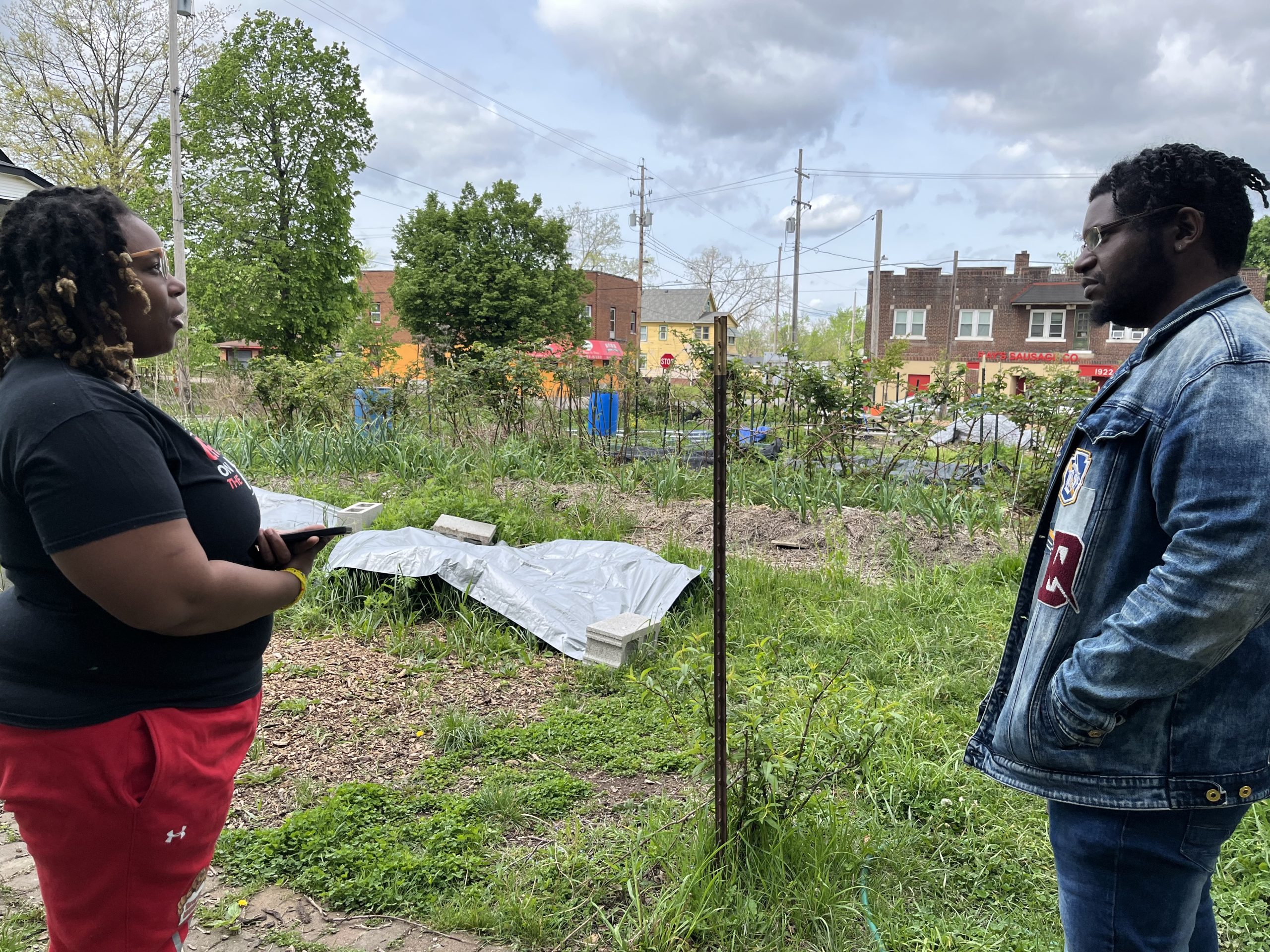
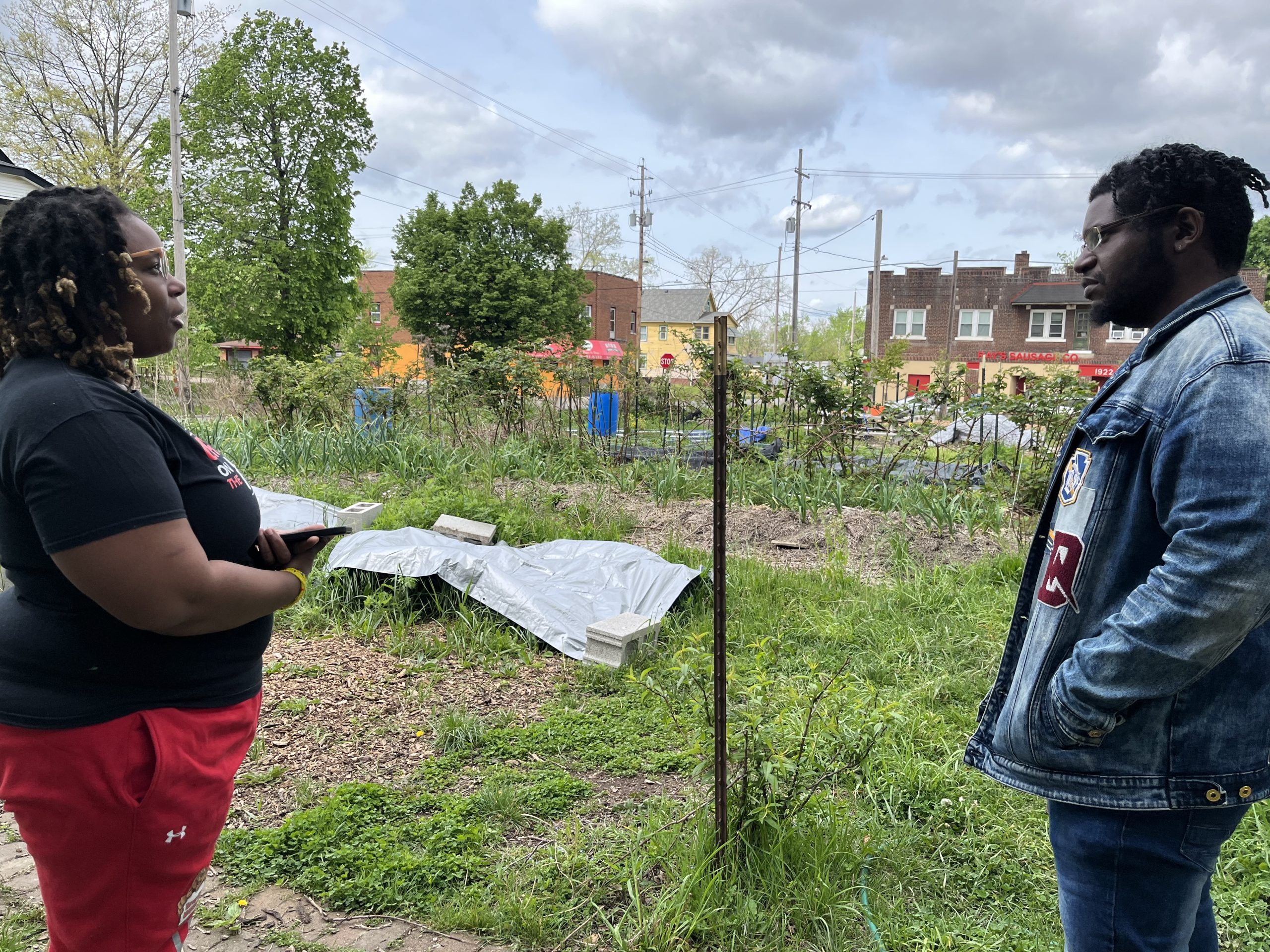
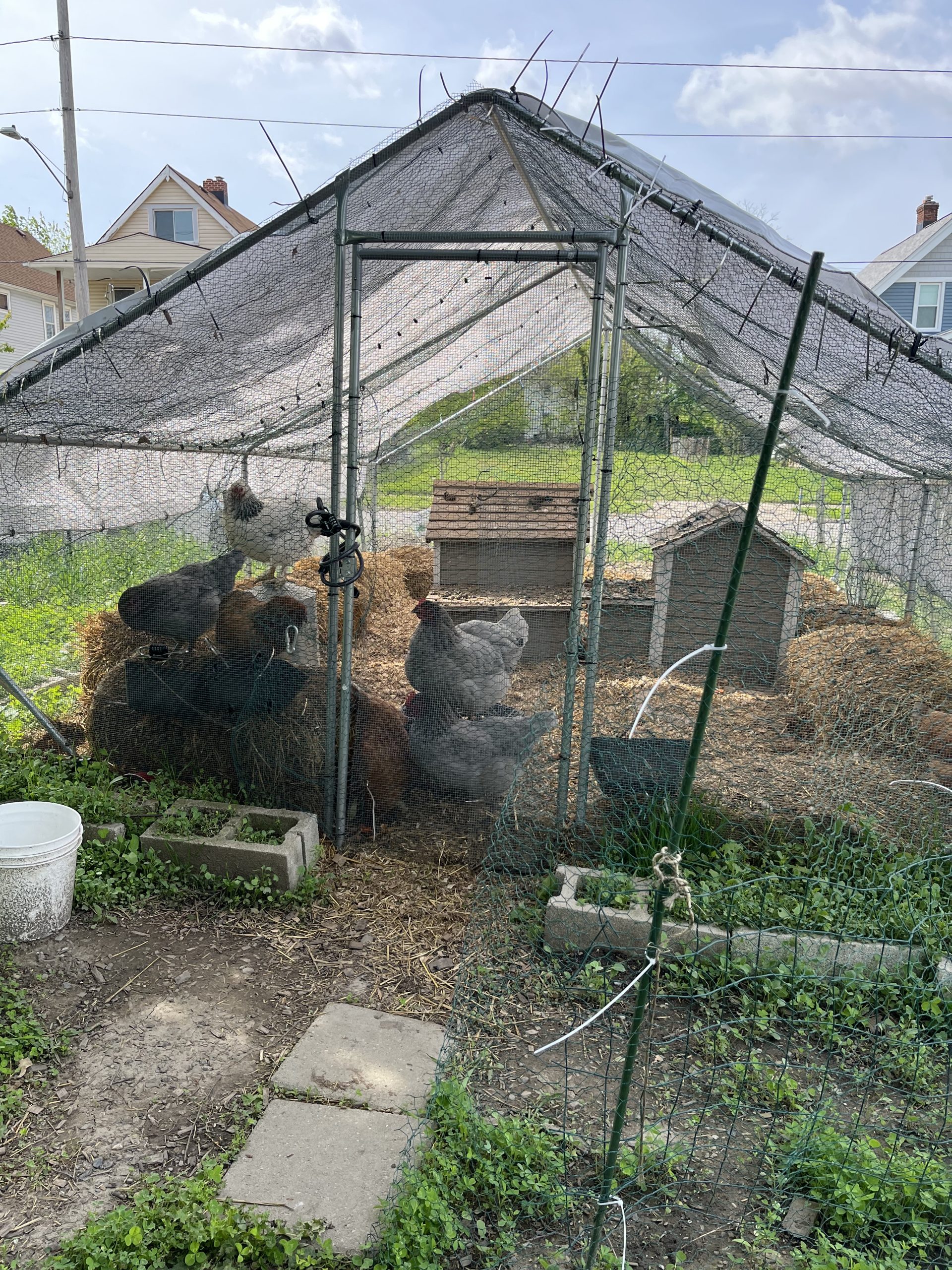
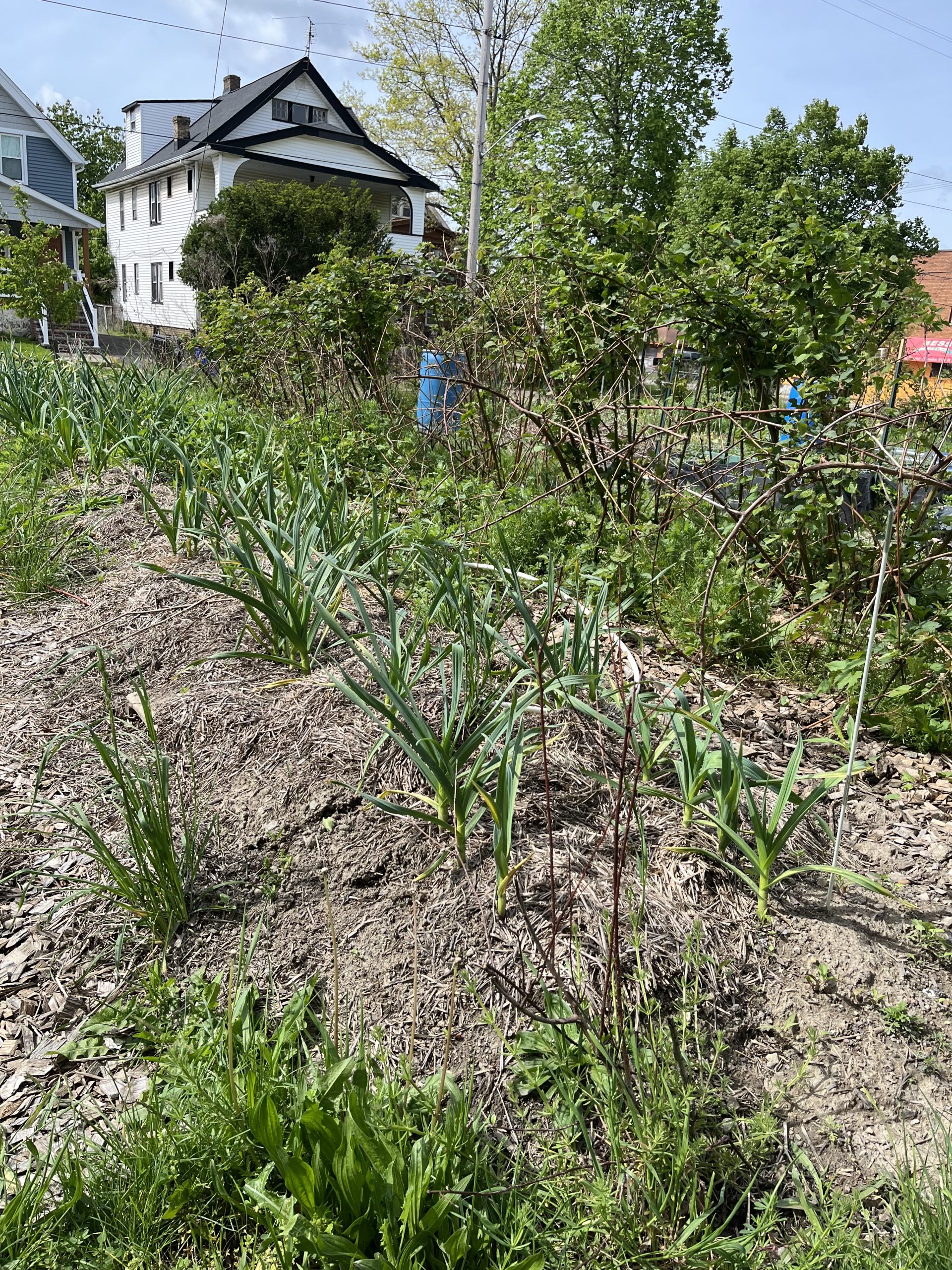
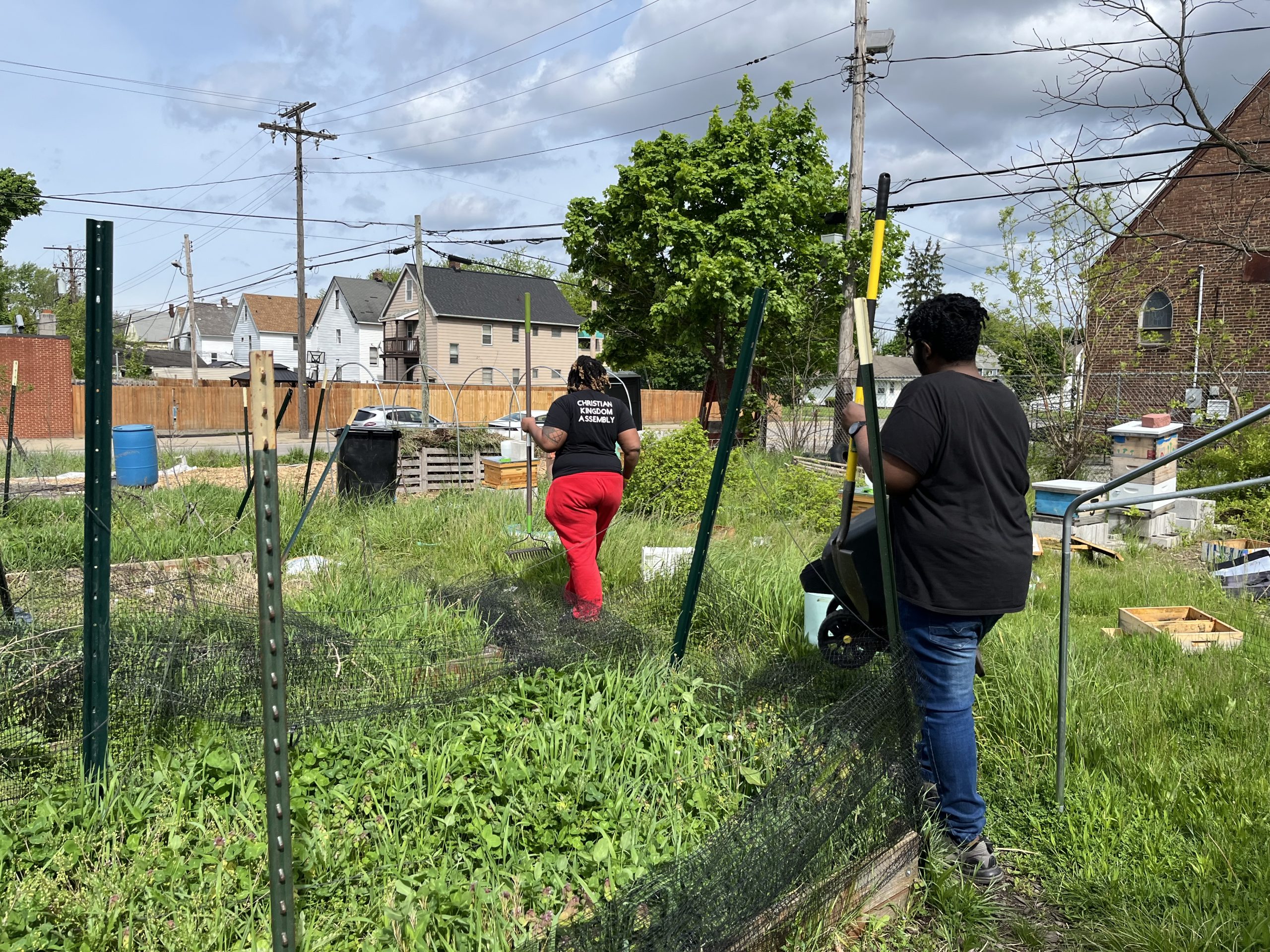
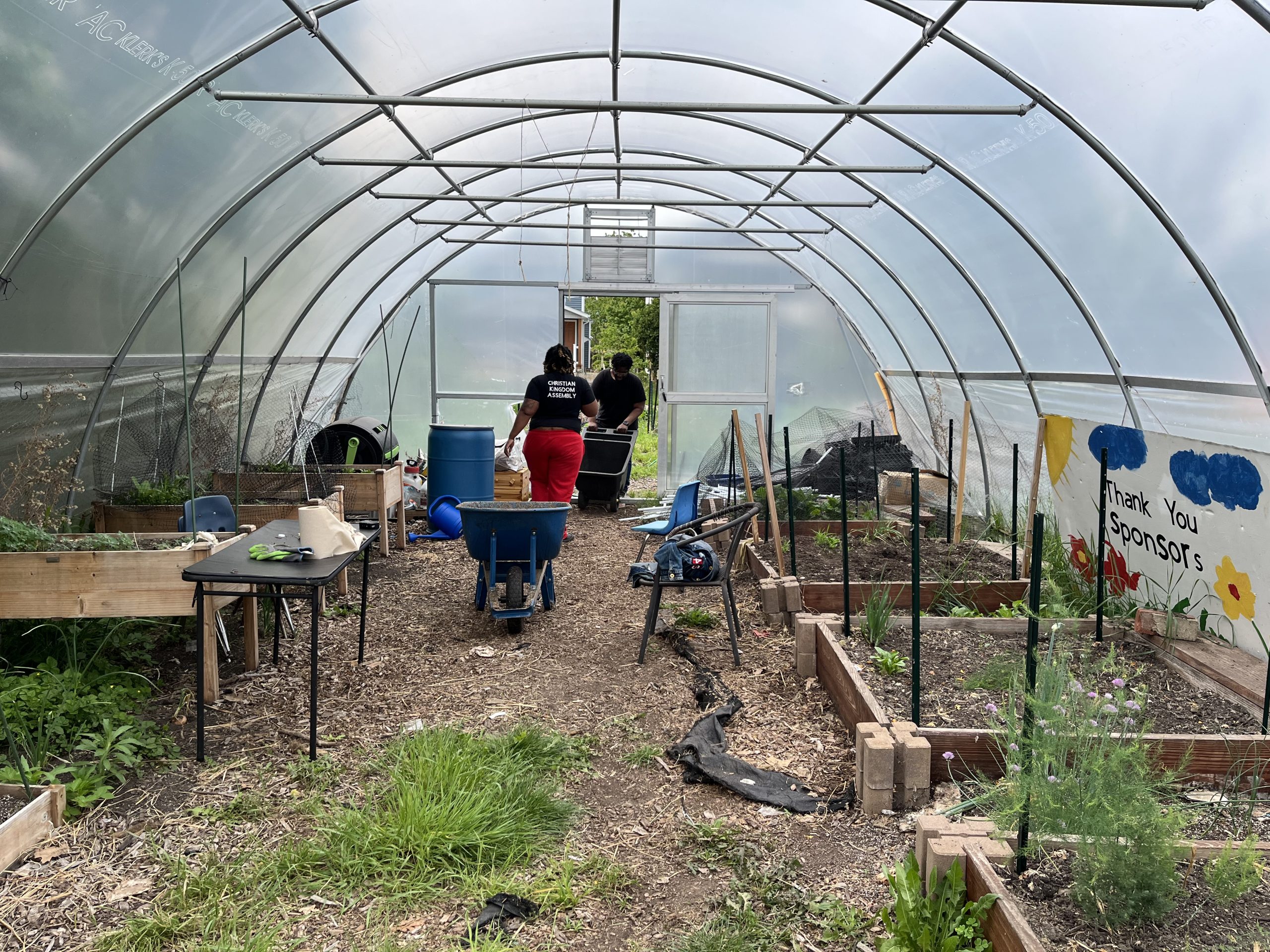
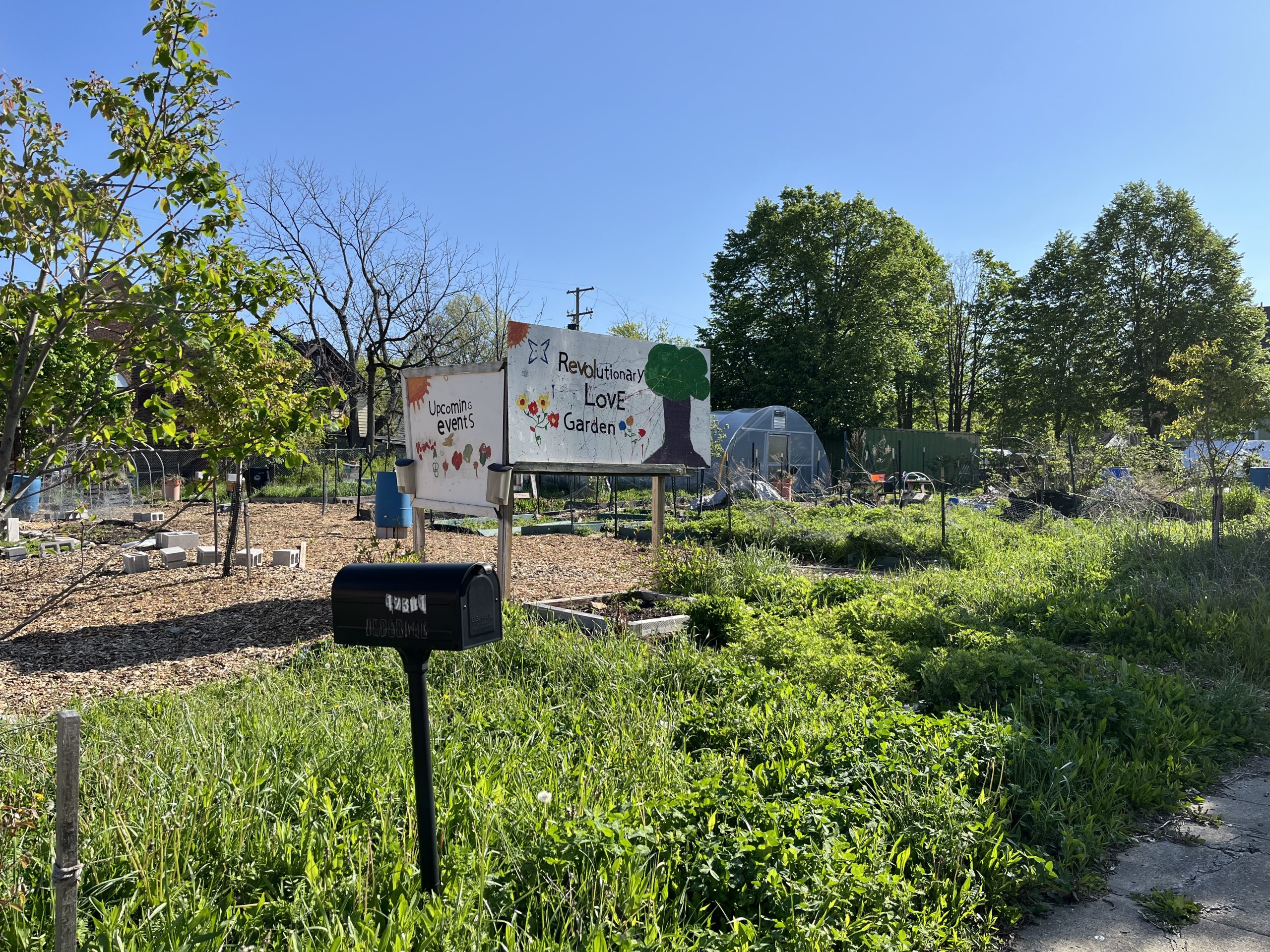
What started in 2017 as three plywood garden boxes beside Bell-Wheeler’s Mt. Pleasant home has evolved into Revolutionary Love, a three-parcel farm on Imperial Avenue of a greenhouse, chicken coops, honeybee apiary, berry vines, fruits and vegetables, and monthly programming. Fully vested in the community, she is not alone in her goal of solving the food apartheid problem across Cleveland’s lower income neighborhoods. Greater Cleveland Food Bank data from 2025 show that 1 in 6 people in the service area were food insecure, meaning they did not know where their next meals would come from. One in four senior citizens also struggled with hunger that year, and higher food costs resulted in the food bank reaching 404,000 residents.
“I think back to when COVID happened, I was dropping (fresh food) off on people’s front porches because grocery stores were bare and there was no fresh produce,” said Bell-Wheeler, a descendant of grandparents who migrated from Alabama where they farmed on their own land. “Even though we are kind of in a good spot, whatever stuff goes on, we’re going to have food to eat.”
Local farms like Revolutionary Love are scaling up their produce for weekly markets and supplying community-owned grocery stores such as the Central Kinsman Wellness Collective, a 2025 pilot farm stop of Environmental Health Watch. Compared to big grocery stores, indoor farm stops connect residents to farmers who share gardening and cooking lessons, thereby building trust and social cohesion. Former Cleveland Councilwoman Delores Gray works on the outreach team that finds local farmers to sign up and conducts surveys and residential meetings.
“The first day, we made $1,000 and we had over 80 (shoppers),” Gray said about the store’s grand opening in October 2025 in the refurbished basement of historic Shiloh Baptist Church on East 55th Street and Scovill Avenue. The farm stop sold produce, dairy and handmade goods. “People came in and were able to save more money because the food prices weren’t high. Twelve farmers came in and set their prices, and we gave them 70 percent of their profit and we took 30 percent.”
Food justice advocates like Bell and Gray hope long-term land leases become available for sustained investments of making fresh food available to those in need. Historically, the city of Cleveland’s land bank did not sell land for urban agriculture. The Department of Development now has the land bank program, and will explore a policy supporting land sales for urban agriculture to enhance land access. Furthermore, the Cleveland Summer Sprout community gardening program will implement changes in 2027 to improve land licensing and water permitting, and explore compensation for members providing food to their neighbors.
“There are lots of changes coming to the Summer Sprouts program moving from being previously funded by Community Development Block Grant to the (Cleveland) general fund, which is great because it’s more than double the funding and more agency over how the funding is spent,” said Local Food Systems Strategies Coordinator Zainab Pixler. “One of the restrictions of the CDBG funding was that you can’t make money on that programming, so that’s where the restructuring came in. I’m excited to explore how we can allow Summer Sprout gardens to be able to sell their produce and generate their own funding and hopefully become self sustaining gardens.”
Nevertheless, Black farmers are undaunted in the quest for more capital through local foundations and national nonprofit funders including Neighborhood Connections, St. Luke’s Foundation, AgFutures Cleveland, Growing Justice and Cleveland Clinic Foundation, who recently awarded The Food Access Raises Everyone (FARE) Project a $100,000 grant to directly support urban gardeners and farmers.
“Private organizations are working to fill the gaps and are unable to fully meet the need. The laws change constantly,” said Anna Kiss Mauser-Martinez, executive director of CityFresh in Oberlin. “Funders are trying to balance addressing immediate needs with investing in long-term strategies, but there’s still so much uncertainty about what’s going to happen next.”
On a national level, accessing funding remains an obstacle. In January 2025, a coalition of Black farmers sued the United States Department of Agriculture on the grounds that one of the department’s programs denied their applications for funding to acquire land on behalf of their deceased relatives. In the case tried at the Sixth District Court in Cincinnati , the plaintiffs claimed the funding program meant to help farmers maintain legacy ownership unjustly made Black applicants susceptible to land loss.
The judge in October of that year did not rule in favor of the farmers, and the case has not been appealed as of yet. In Spring 2026, the 2020 Farmers Cooperative farmers reported that $300 million in dedicated grant funds from President Joe Biden’s Increasing Land, Capital, and Market Access Program were terminated. The cooperative of 24 farming organizations sued the USDA, the Department of Government Efficiency and its leaders, arguing the elimination of grants violated their due process rights and requests restoration of $127 million in grants allocated to their organizations. An order released June 30 by U.S. District Judge Beryl A. Howell ruled that the USDA must reinstate $127 in awards meant for purchasing equipment and land and providing food for the farmers’ communities.

Black Girl Media reached out to the USDA Cleveland Farm Service Agency for comment on any anticipated funding cuts of grants and loans reaching urban farming communities. “The Trump Administration recognizes the value of farm families, large or small, urban or rural,” the agency’s press office replied in an email. “The Department will continue to add value to farm communities but will remain colorblind to divisive DEI practices. There are multiple funding opportunities available, including loans, grants, and disaster assistance.”
In the policy area, food sovereignty organizations committed to land ownership for Black farmers have strategies for restoring political power in establishing food systems that benefit all people. In the state of Ohio, less than 1 percent of farm land is owned by African Americans, said Steve Washington with Central State University Extension program based in Wilberforce. The extension office provides education around growing and basics of starting an agricultural business. Another related network named BIPOC Food Farm Network consists of farmers managing large operations that help smaller peers access USDA funding and other resources.
Telia Badu, founder of Little Africa Food Collaborative, is on a mission with fellow growers to build up the local food system to feed and train generations of Clevelanders. Grants from COVID-19 Rapid Relief fund, Sisters of Charity Foundation, Prince of Peace Outreach and Deliverance ministry and community partnerships with FARE, Urban Farming Collective and village Family Farms sustained LAFC during the pandemic. The collaborative is a 10-year-old nonprofit that educates people on growing food, and in the future, Badu wants to open a for-profit community-owned grocery store to sustain operations and provide jobs.
“Working with people creating food systems is a job,” Badu said. “We are really trying to figure this out; how to help each other grow, how to get land and how to own our land and grow on that land, how to sustain that land and how to make what we grow into products so we can sell and be sustainable.”
Badu, Bell-Wheeler and Pixler are proponents of food sovereignty, defined as the right of individuals and communities to define their own food and agricultural systems. This asserts that the people who produce, distribute, and consume food should dictate how those systems operate. It all begins with volunteers coming together, supporting farmers and launching fundraising campaigns to fund programs dedicated to food justice. Grants by USDA provide initial funds to start CSAs like City Fresh offering food boxes to low-income households in northeast Ohio. Greater awareness of local markets is made possible by a searchable Google Map of the city’s food system, a long-term project by Food Sovereignty Cleveland.
Technological resources like the map make it easier for residents to connect with growers in their area to support and and create healthier neighborhoods. Cleveland Public Library’s Seed Library program allows patrons to check out packets of seeds for growing vegetables and herbs. Farms have workforce development programs that provide jobs to youth and young adults, and Revolutionary Love hires 30 residents ages 14 to 24 through Cuyahoga County’s Youth Opportunities Unlimited (YOU) in the summer and employs seven workers funded by a St. Luke’s Foundation grant.
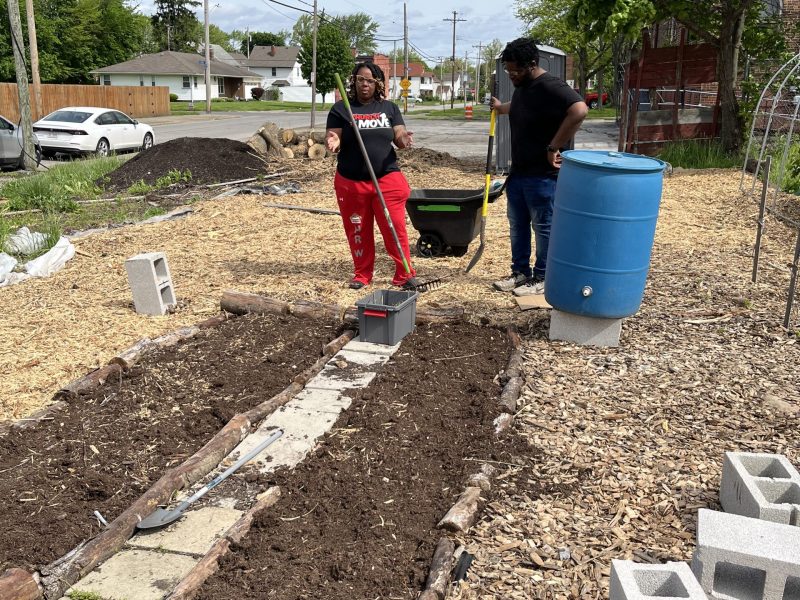
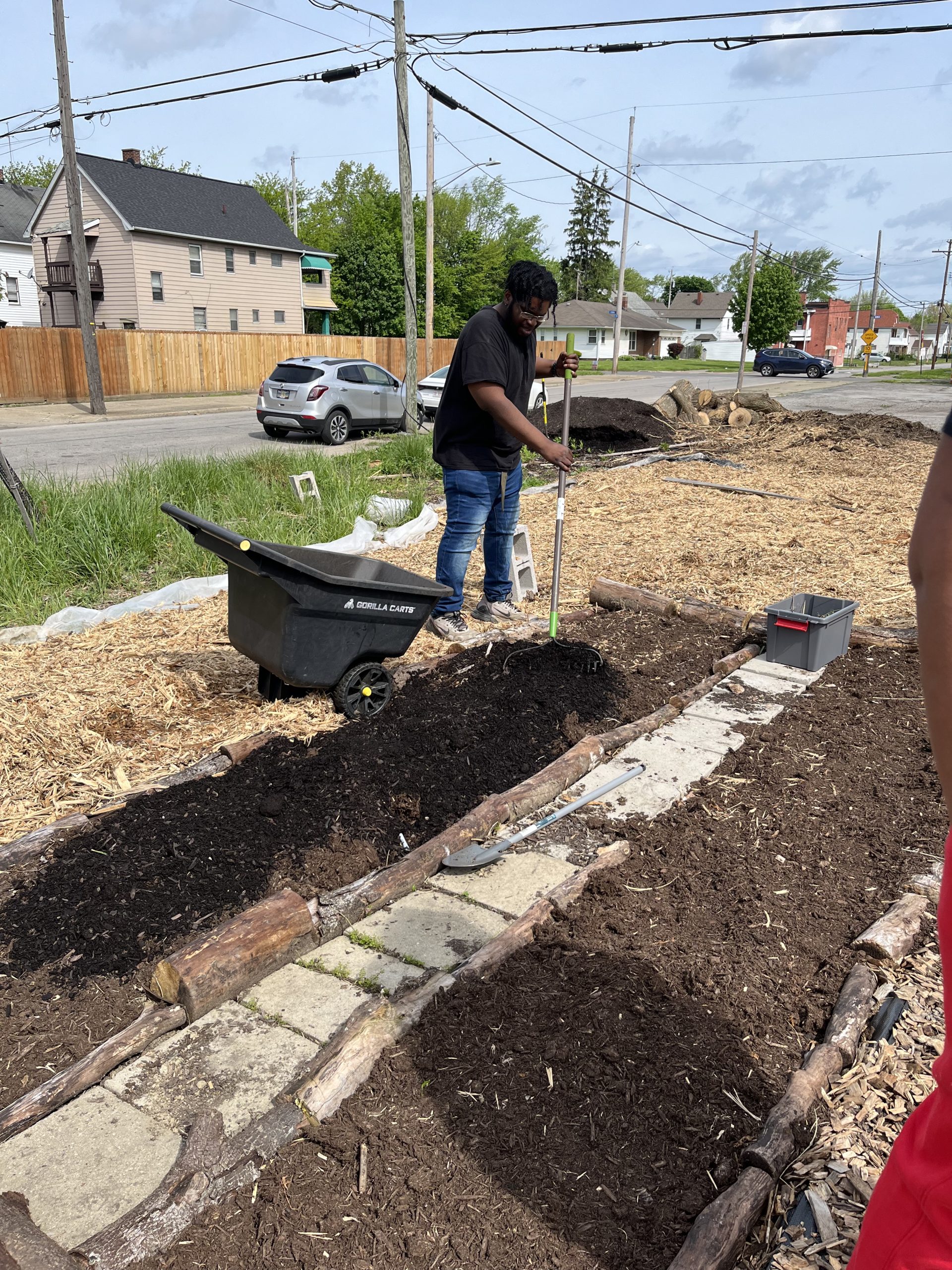
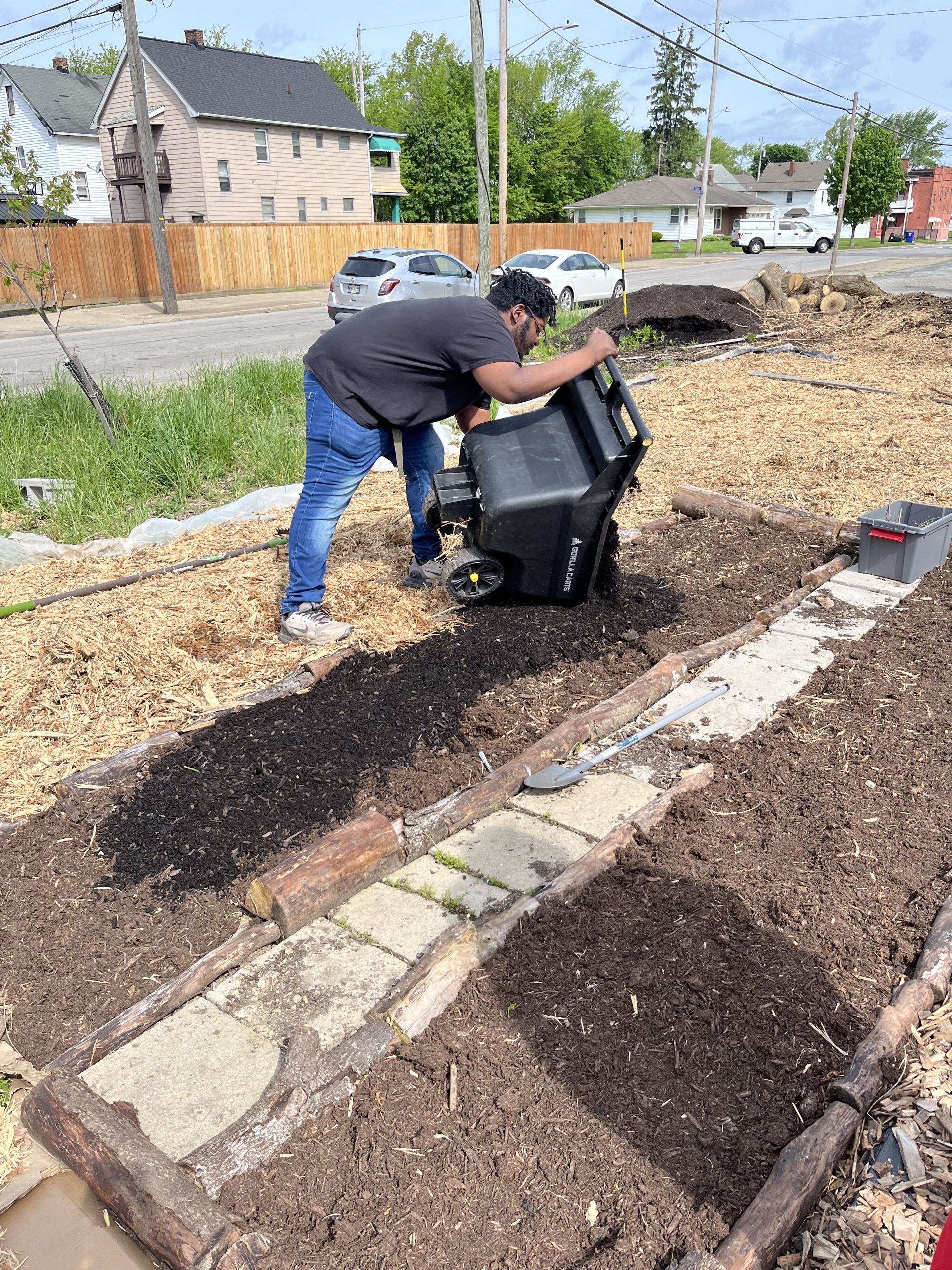
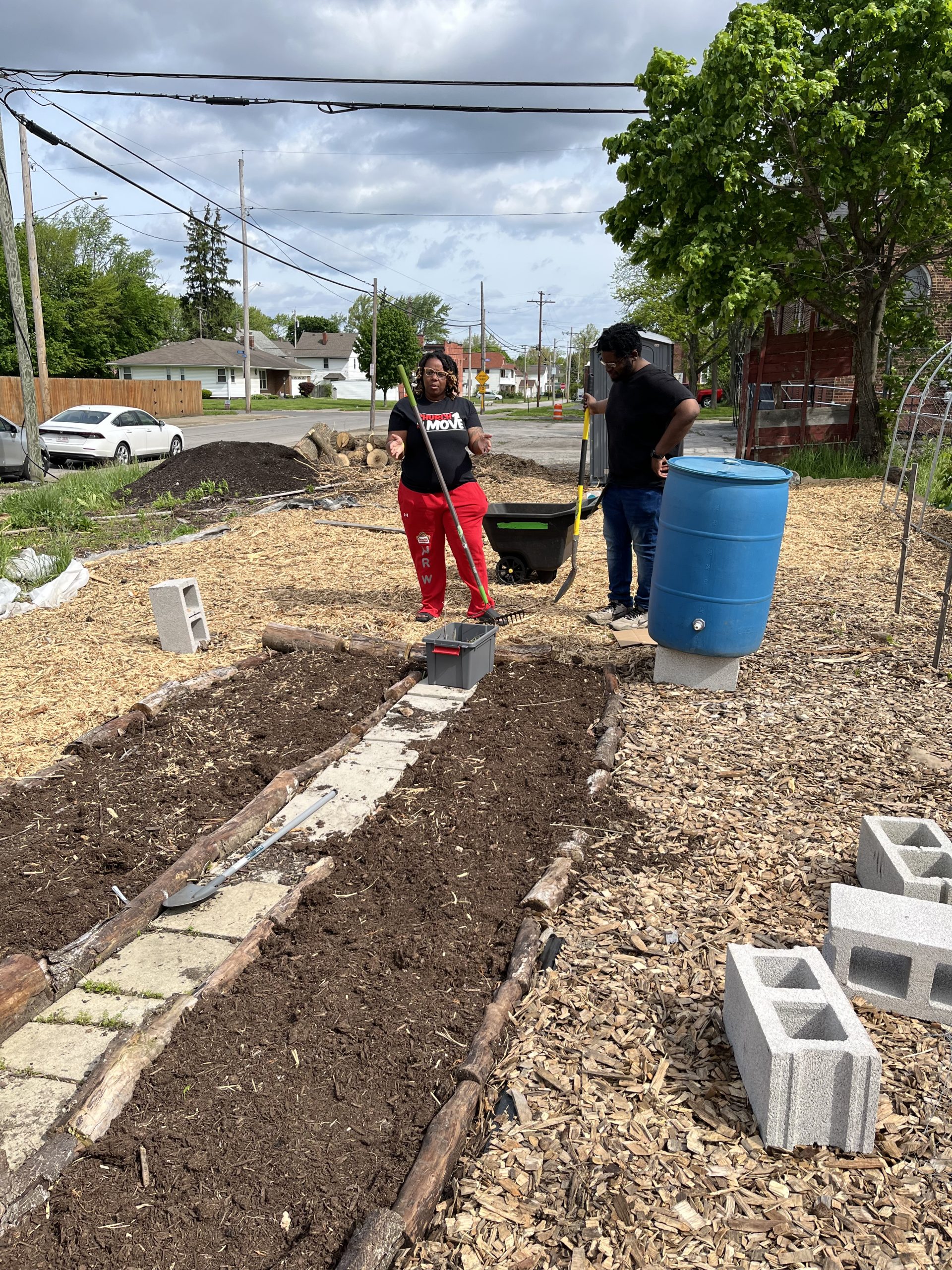
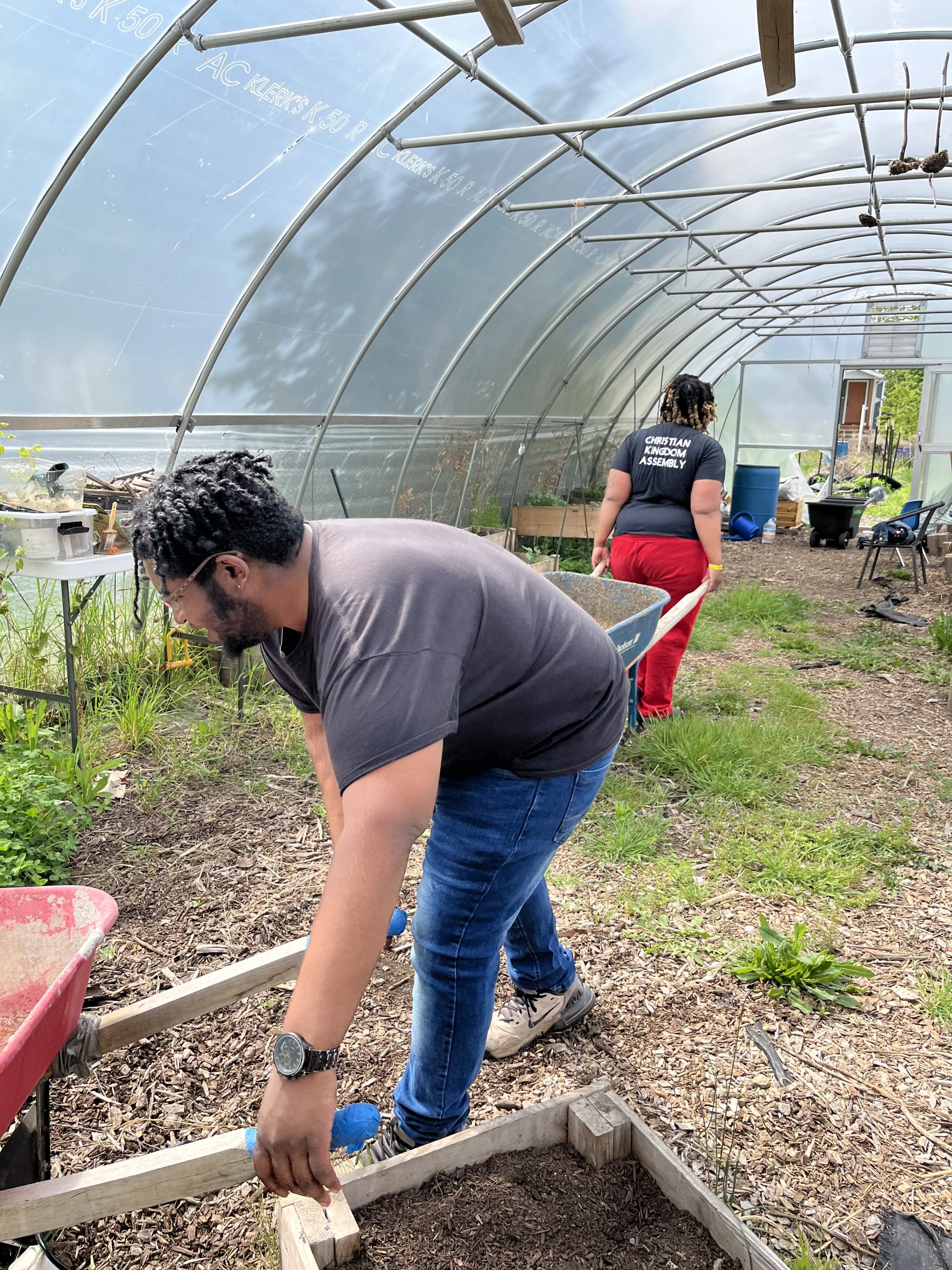
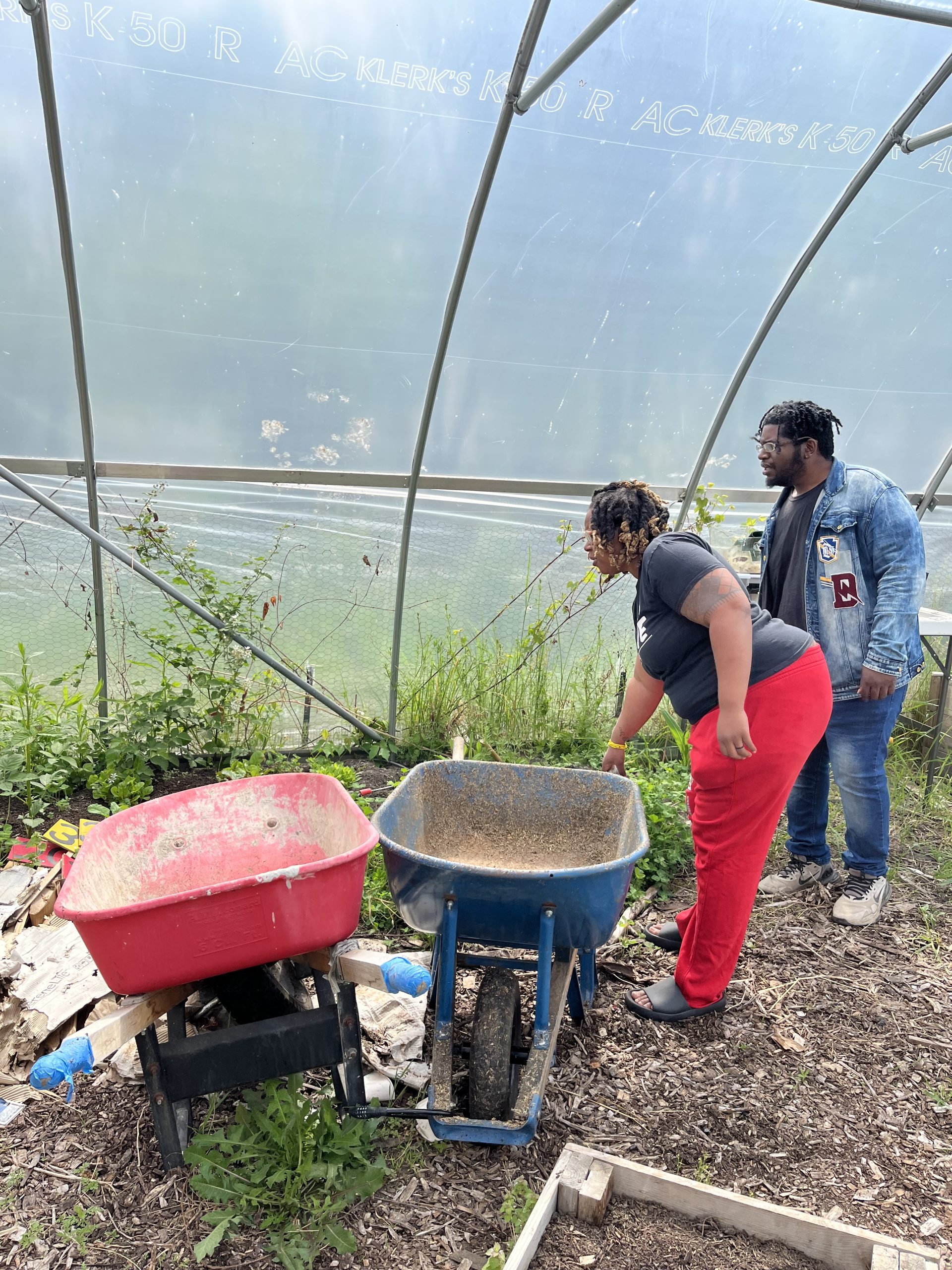
Cleveland resident Keon Glover, 28, works for Bell-Wheeler at Revolutionary Love farm and spent a sunny April afternoon clearing weeds and filling new garden boxes with fresh soil for planting. Glover takes pride in using his gardening skills for the future harvest that will feed his neighbors.
“I started at Cleveland Botanical Gardens in the Green Corps program,” Glover said. “After that I synchronized with the fact that not only is it a main skill for me to utilize for my family as well, but I can also utilize it for the community and that is mainly what I am happy about, and growing food for myself, too.”
Applications to start a garden in the Summer Sprout program are accepted every summer. Contact Zainab Pixler at 216-664-6171 or zpixler@clevelandohio.gov for questions.
Author
