
Successful pilot program leads to Cleveland installing speed tables this summer to improve traffic and pedestrian safety
After a pilot program in 2022, more speed tables are coming to Cleveland streets to increase pedistrian safety
Written by Terricha Philips
The City of Cleveland is taking more steps to save lives on residential streets with its inaugural summer speed table program with a commitment to install 100 asphalt speed tables to slow traffic and increase pedestrian safety.
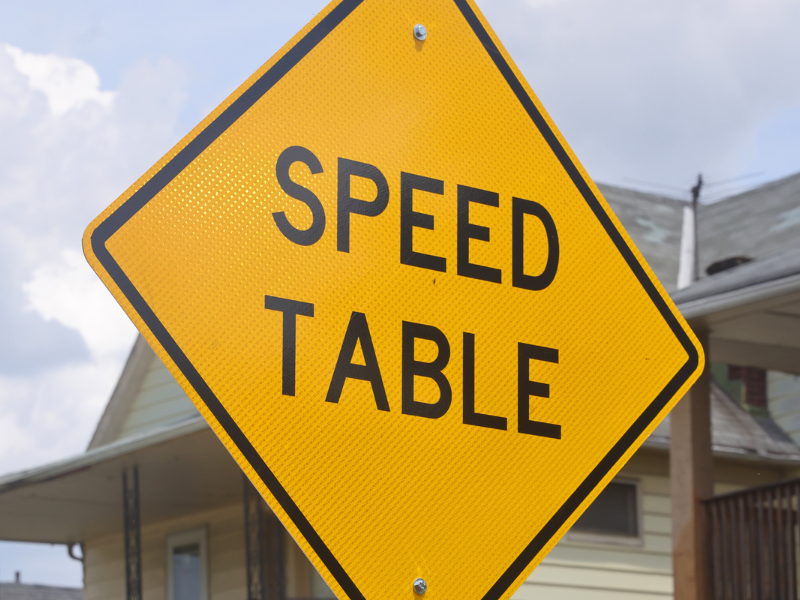
Speed tables are vertical bumps in the road that cause drivers to slow down to drive over them. A speed table is flat on the top and not as abrupt as a narrow and rounded speed bump. The design incorporates radar speed feedback signs posted near speed limit signs showing the travel speeds of passing vehicles to increase drivers’ attention and awareness.
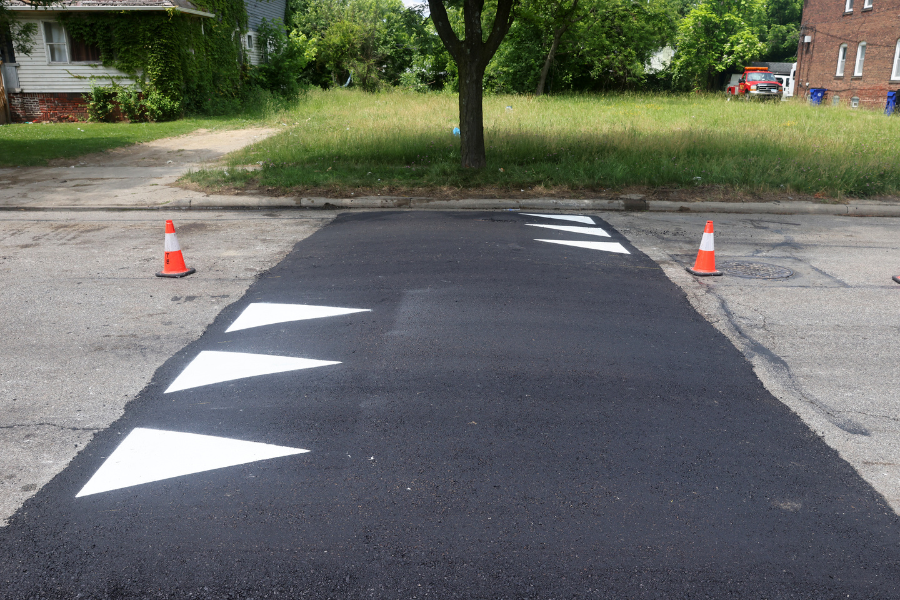
A photo of a speed table recently installing in Cleveland, Ohio. Photo from Cleveland Photo Bureau and TV20
The first three speed tables were installed in early June on E. 140th Street south of Kinsman, followed by installations in Wards 11 and 15 as part of a rotation of various locations across Cleveland, weather permitting. A one-mile stretch of Kinsman Road that meets E. 140th is classified as a high crash segment with a documented 67 fatal and serious injury incidents from 2016 to 2020, according to data from the city’s VisionZero initiative. The project aims by 2032 to eliminate serious injuries and deaths from crashes on Cleveland roads through clear, measurable strategies providing safe, healthy, and equitable mobility for all.
“There are studies that show a one mile-per-hour reduction in vehicle speeds on urban streets results in a six percent decrease in traffic fatalities,” Mayor Justin Bibb said in a press release. “Physical traffic calming works and is an important component of our all-of-government approach to summer safety.”
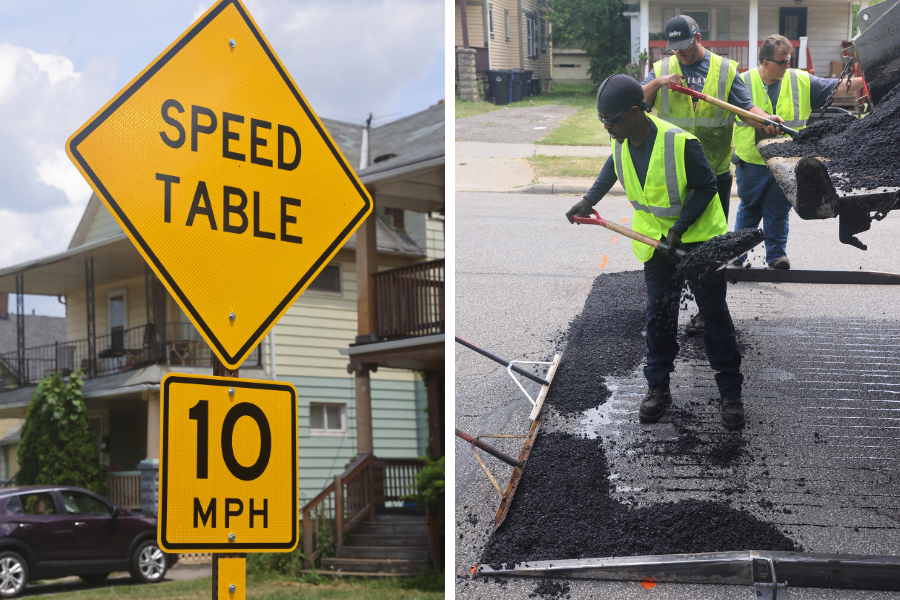
(l-r) sign on residential street alerting motorist to speed tables and crews installing a new speed table. Photo courtesy of Cleveland Photo Bureau and TV20
In 2022, the city enacted a speed table pilot across ten test sites including Edgewater Drive between W. 117th and W. 115th Street, Dickens Avenue between Larry Doby Way and East 116th Street, and Judson Drive between E. 151st Street and East 160th Street. The design targets called for speed table widths at 10.5 feet and 14 feet wide, depending on traffic volume, and speeds of 15 miles and 20 miles per hour.
Cleveland’s Senior Strategist for Transit and Mobility Calley Mersmann said speed tables on residential streets improve comfort, safety and quality of life in neighborhoods.
“The higher volume corridors are very long and carry more traffic quicker. These streets connect to communities outside of Cleveland, bringing higher rates of injuries and fatalities at night for roads that are clearer,” Mersmann said. “Streets are designed in a way to allow higher speeds when no other traffic is on the road (with a) relatively high rate of single-vehicle crashes…these are typically state routes that connect multiple communities and states.”
The transportation program is made possible through the Back to Basics Capital Fund, the city’s $30 million American Rescue Plan Act investment in city street upgrades, traffic calming initiatives, and playground and park improvements. Traffic calming refers to street design solutions that slow vehicle speeds, making streets safer for all road users. According to city data during the 2022 speed table pilot, average speeds fell by 7.8 miles per hour, and over 77 percent of survey respondents supported an expanded program in Cleveland.
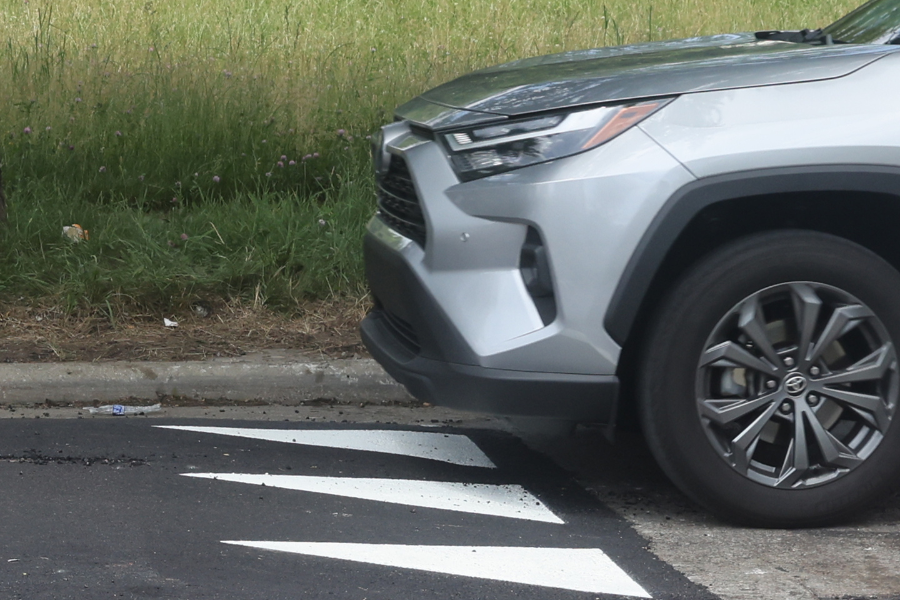
A car approaching a new speed table in Cleveland. Photo courtesy of Cleveland Photo Bureau and TV20
A past philosophy of transportation planners and engineers for moving road traffic as quickly and efficiently as possible has shifted to a present philosophy of having more compassion for pedestrians and cyclists, said Bonnie Teeuwen, chief operating officer for the city of Cleveland, who has 39 years of experience planning city, county and state transit projects. “It’s not just about moving traffic, we’re moving people as safely as possible. With our city’s population now at 390,000, this is a good opportunity to take advantage and see how traffic is flowing.”
This summer, the city’s Public Works team is focused on local streets with medium traffic volumes (1,000 to 4,000 vehicles per day) and documented speeding issues (average speeds near 25+ miles per hour, and 85th percentile speeds near 31+ miles per hour), according to city traffic data. The speed table program also prioritizes locations with crash history or the presence of schools, parks, or other areas with high pedestrian volumes.
“I consistently hear from residents in my ward concerned about speeding and the safety concerns that reckless driving creates,” said Ward 2 Councilman Kevin L. Bishop, chair of Council’s Municipal Services and Properties Committee, affirming support from Council members about the program’s implementation.
Residents of Cleveland are encouraged to give comments and feedback as the city collects traffic data, with plans to add more locations on an ongoing basis. More information on the speed table program, including the pilot evaluation report and specific locations for installation this summer can be found on the city’s website.
Support our work so we can continue to tell “our” stories.

Author
